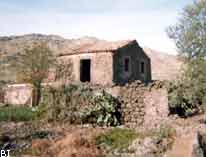
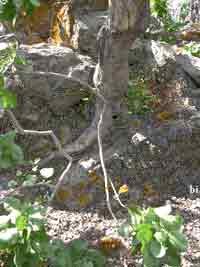
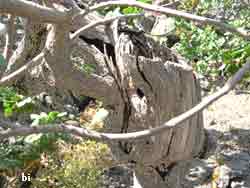
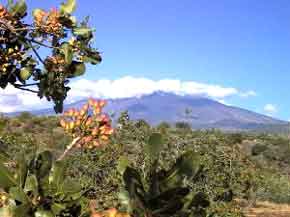
Here, in a steep and stony land, the brontese peasant has reclaimed and transformed the lava flows of Etna in an unusual Eden, realizing the miracle of a plant born from the rocks to produce small, tasty fruits of the highest quality, of a beautiful color: emerald green, sought after and used in confectionery and gastronomy for their elevated organoleptic proprieties. Today, in the extensive brontese territory (25.000 hectares), pistachio orchards occupy nearly 3.000 hectares of stony ground, with very limited arable space and with steep and rough slopes, not suitable to other h1ized crops.
The quotations from the past
Brother Jacopo d'Acqui, who was the first biographer of Marco Polo and contemporary to him, describes the astounding pistachio dishes tasted by the young Venetian traveler during his marvelous travel towards the distant China. «Reports of young camel's thighs stuffed with duck, stuffed again with minced pork meat, pistachios, raisins, pine-seeds and spices. Of a soft and trembling cream, called balesh, made with flour, whipped cream and honey, delicately seasoned with pistachio oil or with a precious pastry of Sheriye, which is a kind of pasta like our fettuccine, but cooked in cream with pistachios and very, very small bits of gold and silver, so thin that had to be eaten with the rest of the sweet. In some areas of Sicily it was appreciated an infusion of the fresh bark of the tree, and it was believed that the resin of the trunk could cure the inguinal hernia, but only if used during the recitations of appropriated magic formulas». (I. Faro, Pistachio between history and kitchen, Center Studies Europe 2000, 1991) Many are also the miraculous characteristics bound to consumption of pistachio often mentioned in ancient treatises of natural history and in ancient texts, charming progenitors of modern books of dietetics and alimentation sciences. Since 1612, Baldassarre Pisanelli in his "treatise about foods and drinks" was writing that pistachios "cure marvelously liver problems, clear the chest and the kidneys, strengthen the stomach, send away nausea... Can arouse erotic appetite, ...with wine are an excellent remedy against poisons ...". Another particular characteristic, handed down by our elders and reported also by Lemeri in his "Treatise about foods and the way to preserve them…" (Venice, 1705), says that «excite the Venus ardors and increase the feminine humors exciting a sweet fermentation of the blood». Bronte and its territory historical events, gone, in the last centuries, from one master to another, are tightly bound to that Benedictine Maniace's abbey (1174), of the Palermo's big and new poor men hospital, to which, in (1494, Pope Innocenzo VIII gave gratuitously the Abbey and all its territory and to those of Horatio Nelson, to whom in December of 1798, the Bourbon king Ferdinand gave in perpetual gift the territory and the city of Bronte. The people of the area, mostly peasants and shepherds, were so cheated and impoverished by a century-old condition of extreme vassalage. The small Council got even poorer because of a great court case, initiated in order to get back the land so obviously usurped. and that went on, without interruption, for over three centuries. Lacking cultivable land -- the majority of which belonged to the Hospital, the Duchy and few others--the Brontese peasants, during centuries of hard work, were compelled to cultivate the stony lava lands so changing bare lava castings in pistachio orchards.
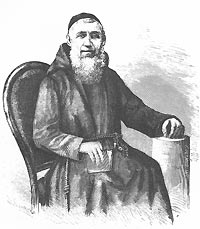
So wrote father Gesualdo De Luca in the far 1883
|

.gif)

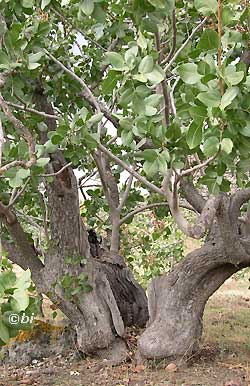 The pistachio (from the Greek Pistàkion) is a plant indigenous to Mediterranean countries (Persia, Turkey), cultivated for its seeds, to be eaten as they are, to be used in confectionery or to flavor sausages.