 |  The cards, the people, the memory ... |
| Bronte's personalities |  |  |
| You are in: Home–› Personalities–› G. Saitta, A. Spedalieri, P De Luca |
prodigy of knowledge and wise universal genius
Giuseppe Saitta 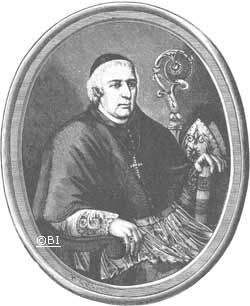 Giuseppe Saitta, (Bronte 31 January 1768 - Patti 20 June 1838), bishop of Patti, was a profound connoisseur of the theological and philosophical disciplines, jurist, poet and appreciated composer and musician, a very good harpsichord and organ player. Giuseppe Saitta, (Bronte 31 January 1768 - Patti 20 June 1838), bishop of Patti, was a profound connoisseur of the theological and philosophical disciplines, jurist, poet and appreciated composer and musician, a very good harpsichord and organ player.
It was defined by his contemporaries as a prodigy and a master of knowledge and a most wise universal genius. He began his first studies at Bronte in the College recently founded by Capizzi and from 1780 he continued to Monreale where he specialized in canon law, civil law, ecclesiastical history and music, which was his passion and where he was a professor of literature. In Catania he studied jurisprudence and perfected himself in music. Retired in Bronte he devoted himself to the works of St. Augustine and St. Thomas and to English literature, and founded a philharmonic society he himself directed. He was a very valuable speaker, poet, theologian, philosopher and a great connoisseur of Roman law and foreign languages and literature. He was above all a great teacher and brought a real renewal in teaching and culture before, since 1817, in Monreale (at the time known as the Athens of Sicily), where he taught literature and held the position of Director of Studies from 1822 and then, from 1832 to 1833, in the Capizzi College where he taught Latin and Greek and who also served as Rector (he had also been in 1820). | 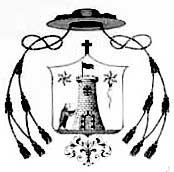 Gesualdo De Luca (History of the City of Bronte, 1883) writes that «Mons. Fr Benedetto Balsamo, Archbishop of Monreale, hearing that he had preached it in Palermo, called him to himself in that Seminary full of great and talented men, such as the Zerbo, the Guardi, the Caruso. At first he was Professor of literature, then of revealed theology, and he gave him the position of Director of Studies. Gesualdo De Luca (History of the City of Bronte, 1883) writes that «Mons. Fr Benedetto Balsamo, Archbishop of Monreale, hearing that he had preached it in Palermo, called him to himself in that Seminary full of great and talented men, such as the Zerbo, the Guardi, the Caruso. At first he was Professor of literature, then of revealed theology, and he gave him the position of Director of Studies.
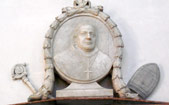
Di Carlo (Nicolo Di Carlo, canon, his disciple and biographer) proletely narrates how wisely the Saitta in theology lessons grafted questions of philosophy and other sciences: and in what capacity as Director of the studies, he promoted the culture; and how to entice young people's spirits he never insisted on explaining the rules of the thing (mediocre quality says Di Carlo) but he took away from commenting a classic text of some sum and made him admire.» Concorde with the thought of Nicola Spedalieri, Giuseppe Saitta was a partisan of democracy and always advocate of the rights of the Brontesi in the centuries-old struggle undertaken against the continuing harassment and usurpation of the Palermo Hospital before and the Dukes Nelson later. | Above the bishop of Patti (Messina), Monsignor Giuseppe Saitta in an engraving taken from the book by Gesualdo De Luca "History of the city of Bronte". Next to the left is the episcopal coat of arms of Patti
One of his great followers, Cardinal Antonino Saverio De Luca, said of him: "Of all the illustrious men I have known, none, I have met superior to the Saittas for height of intelligence and for varied and profound doctrine". |
| Canon of the Collegiate Church of Monreale from 25 February 1834, on the proposal of Ferdinand II of Bourbon, was appointed on 30 September of the same year by Gregory XVI bishop of Patti (on the right the coat of arms of Bishop of Patti), where he left with his perennial works memory and where four years later, on 20 June 1838, he died. The learned, the lords, the same court often turned to him as an oracle for advice and precepts. At Patti he completed the seminary factory, he had the chapel built at his own expense and he increased and nobilized his studies; he created by putting a pawnshop on his funds. In the same city he died on 20 June 1838. Many who had him as a teacher wrote proud of him. One of his disciples, Nicolò Di Carlo, speaks of this: «The merit of him true, intrinsic, absolute, shone with his own light, and all of his own, neither he was relative to the humble place, where he lived. If he had flourished not in Sicily, not among the solitary scenes of the little Monreale, but in London, in Paris, in Rome, wherever it would have been great and marvelous.» ("Works", From the printing house of Morvillo, Palermo 1849) An illustrious disciple of Monsignor Saitta, Cardinal Antonino Saverio De Luca, said of him: «I have met many illustrious men, no one, I have met superior to the Saitta for height of ingenuity and for varied and profound doctrine». «There is a legend," wrote Giuseppe Cimbali, "that his mother, one day, while still holding him in her bosom, felt her voice high; she was terrified; but, then, by the unanimous consent of all, he drew from this fact a glorious wish: that son would be a great; and it was.»
| |
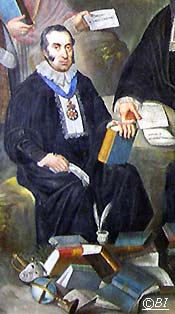
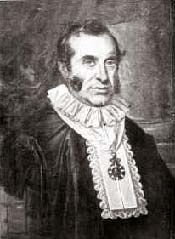
The bishop of Patti  The bishop of Patti, mgr. Giuseppe Saitta portrayed in some paintings: the first painting, preserved in the Real Collegio Capizzi, dates back to 1838: a written below reads: «Ingenium moresque probos sophiamque requires[que] / invenis hac Joseph presulis effige». The bishop of Patti, mgr. Giuseppe Saitta portrayed in some paintings: the first painting, preserved in the Real Collegio Capizzi, dates back to 1838: a written below reads: «Ingenium moresque probos sophiamque requires[que] / invenis hac Joseph presulis effige».
This is certainly a copy of the other painting (in the center) that is found in the sacristy of the Cathedral of Patti, together with other 21 paintings of Bishops who have succeeded in the government of the Diocese.
In the third picture Mons. Saitta is portrayed by Agostino Attinà (1874) among the "illustrious Men of Bronte". The engraving at the top next to the title is taken from the book by G. De Luca "Storia della Città di Bronte" (1883)
|
|
|
|

He characterized the science combined with love for the next sick
Arcangelo Spedalieri 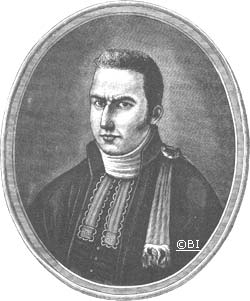 Arcangelo Spedalieri, (Bronte 1779 - Alcamo 1823), a doctor in medicine and surgery, was a great physiologist and an illustrious anatomist. Benedetto Radice called him "the Sicilian Hippocrates, honor and pride of the universities of Bologna and Pavia". Arcangelo Spedalieri, (Bronte 1779 - Alcamo 1823), a doctor in medicine and surgery, was a great physiologist and an illustrious anatomist. Benedetto Radice called him "the Sicilian Hippocrates, honor and pride of the universities of Bologna and Pavia".
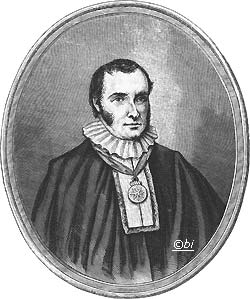
Niece of Nicola Spedalieri, he began his first studies in Bronte nel Collegio recently founded by Ignazio Capizzi to continue them in Palermo where, graduated, remained for three or four years that were the prelude in the exercise of that profession in which he had to touch the excellence. Abandoned Sicily stopped shortly in Naples, Rome, Florence and reached the learned Bologna who, at that time was still "the alma mater studiorum". Here he did not struggle to make himself known: at the age of 29 he is already an assistant at the University's medical clinic. In Bologna he began to dictate the first lessons in zoology and mineralogy, but he did not live there much, and because of his growing aspirations, he preferred to go to Pavia to complete his studies. Here he perfected his studies with Count Pietro Moscati, of which he became an assistant and a friend, and held the teaching of Physiology and Medical Anatomy from 1813 to 1821. He soon became known throughout Italy, becoming one of the most renowned doctors, for his vast doctrine and the readiness and security of the diagnosis but also for the many students who attended his lectures. He was gentlemanly in his manners, a powerful person, and his physical prowess, combined with knowledge and integrity of character, exerted an irresistible charm, especially on youth. At the age of 40, he was at the height of his career. | Between 1815 and 1817 he also taught medical police, and in 1817 he became a professor of physiology and anatomy; he was rector of the university in the biennium 1819-20. In 1820 he married Giuseppina Lesperon, intelligent, cultured, with fine feelings, from whom he had a son, Giuseppe. Forced, too, to be absent from Pavia city because he was called elsewhere to give his healthy advice, in 1823 he returned to Sicily, from which he had been absent for many years. He was invited to Alcamo for a consultation. And there, at the age of 44, while restoring health to others, her life was suddenly cut short by a deadly infirmity. On 6 May 1823, a stroke in fact caused his death, leaving unfortunately incomplete one of his treaties that had cost him 15 years of research. He was buried in the same city of Alcamo. Arcangelo Spedalieri personified the science combined with love for the next sick; he was the author of prestigious medical and natural sciences texts. Principal Works: "Memories on the analogy between the vegetal and the animal life", Milano 1802, "Memory of animal physics", Milano 1806; "Pathologic reflections on the stomach' break", Pavia 1815. | On the left, the'" Sicilian Hippocras", the physiologist Arcangelo Spedalieri in an old drawing taken from the book by G. De Luca "History of the City of Bronte", and (on the right) from "Uomini illustri" of Agostino Attinà. | 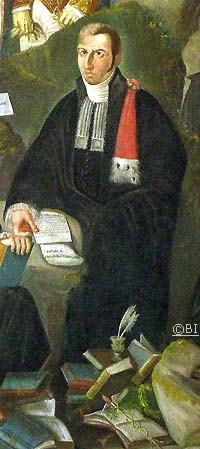 |
|
|
|
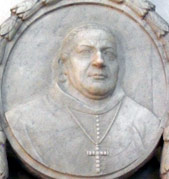
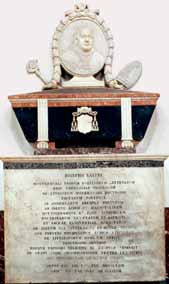
 Defending the interests of the Council in one of the many lawsuits between the Dukedom and the citizens of Bronte, grieved of seeing the oppressed poor people, sent, using the influence of his brother Antonino, even a memorial to the English Parliament.